
PSL JIT - Kanban Implementation Presentation   62-slide PPT PowerPoint presentation slide deck (PPT)
$39.00

PSL JIT - Kanban Implementation Presentation (62-slide PPT PowerPoint presentation slide deck (PPT)) Preview Image
Log in to unlock full preview.
PSL JIT - Kanban Implementation Presentation (62-slide PPT PowerPoint presentation slide deck (PPT)) Preview Image
Arrow   Click main image to view in full screen.

PSL JIT - Kanban Implementation Presentation (PowerPoint PPT Slide Deck)

PowerPoint (PPT) 62 Slides

#2 in Kanban $39.00
This presentation is developed by a pioneer in Lean and certified LSS Master Black Belt who has trained over 5,000+ students globally, from Directors, CEOs, GMs, to shop floor staff. He's endorsed by CMI Consortium, NZTE, HERA, NZPICS, CBAFF.
Add to Cart


Immediate download
Fully editable PowerPoint
Free lifetime updates

BENEFITS OF THIS POWERPOINT DOCUMENT

  1. Implement Kanban -- regulate flow and save inventory costs.

JIT PPT DESCRIPTION

Editor Summary PSL JIT - Kanban Implementation Presentation is a 62-slide PowerPoint deck from OpEx Academy NZ and a Lean pioneer/certified LSS Master Black Belt that provides a step-by-step JIT/Kanban implementation guide. Read more

This presentation provides you what all one needs to know about Kanban systems and Implementing Kanban.
The topics covered are:
History of Kanban
Purpose of Kanban
Kanban & Visual Systems
Kanban and Planning & Scheduling
What is a Kanban?
Benefits of Kanban Systems and examples
Where is Kanban used?
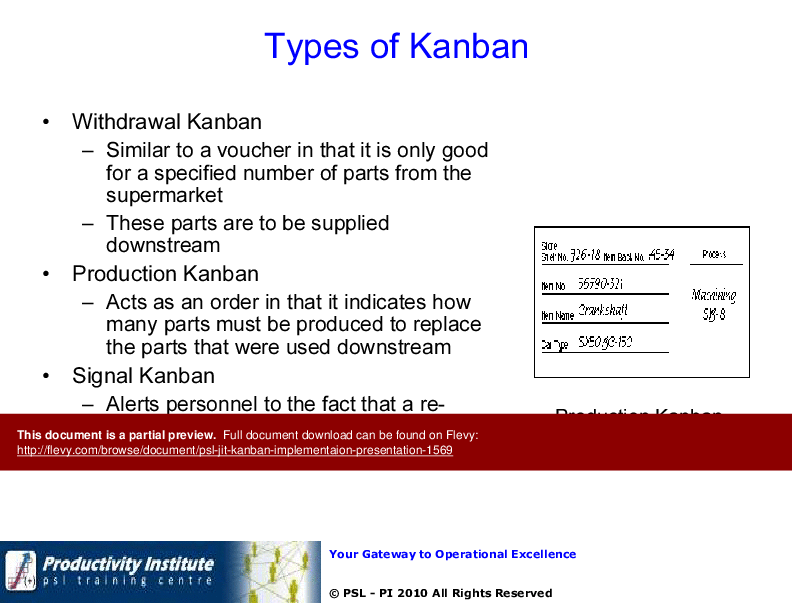
Types of Kanban (Withdrawal, Production, Signal)
Kanban real-life examples
CONWIP system, FIFO Lanes
Step by Step Guide to Implementing Kanban (7 steps)
Case Study – Kanban Calculations

There are in all 62 slides.

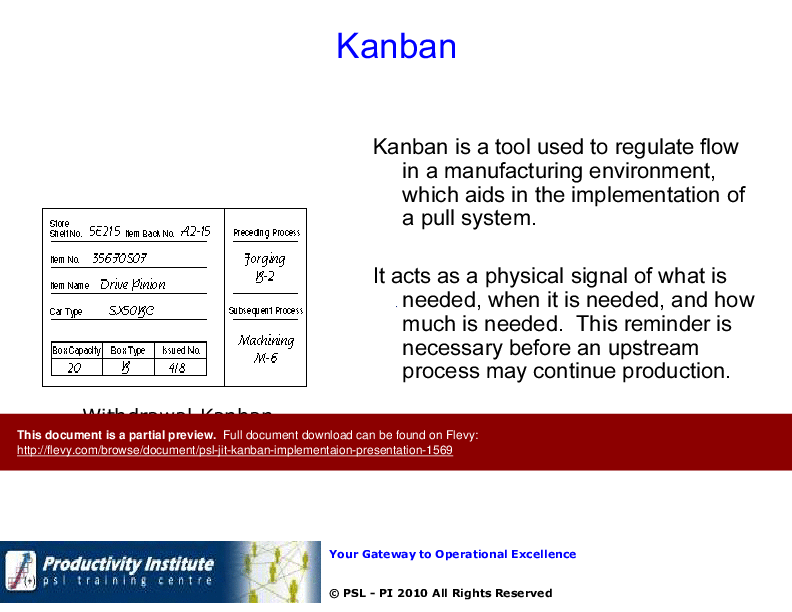
Kanban is a powerful tool for regulating flow in manufacturing environments, facilitating the implementation of a pull system. It acts as a physical signal indicating what is needed, when it is needed, and how much is needed. This visual cue ensures that upstream processes do not continue production until the necessary items are available, maintaining a smooth and efficient workflow.

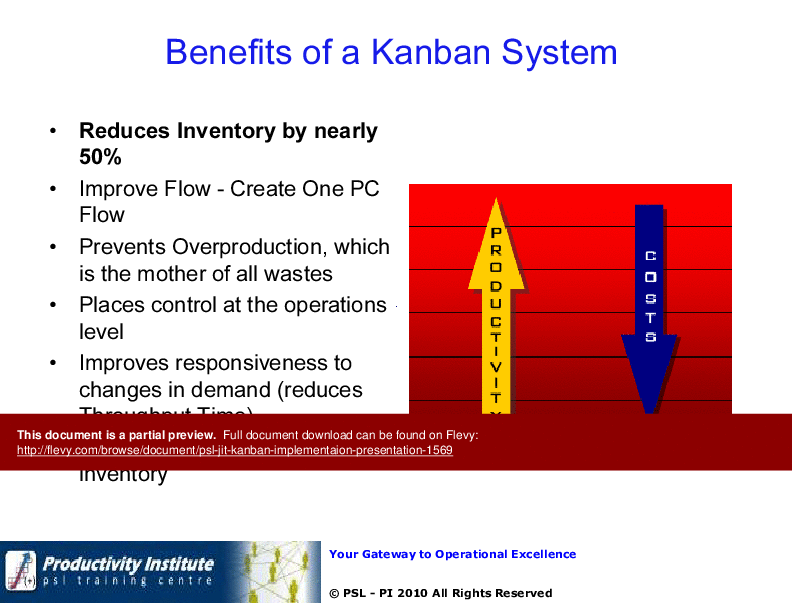
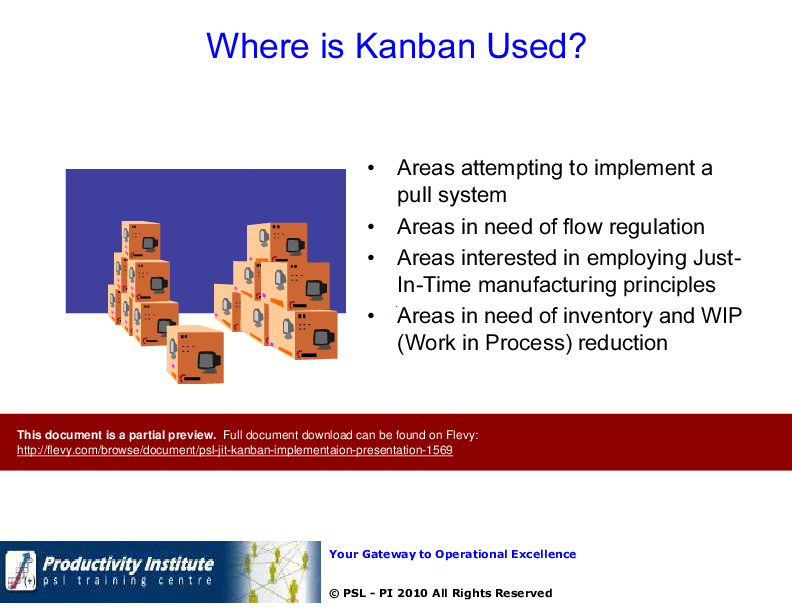
The benefits of a Kanban system are substantial. It can reduce inventory by nearly 50%, improve flow by creating a one-piece flow, and prevent overproduction, which is a major source of waste in production processes. By placing control at the operations level, Kanban enhances responsiveness to changes in demand, thereby reducing throughput time and inventory levels. This system is particularly effective in areas attempting to implement a pull system, regulate flow, employ Just-In-Time manufacturing principles, or reduce inventory and work-in-process.

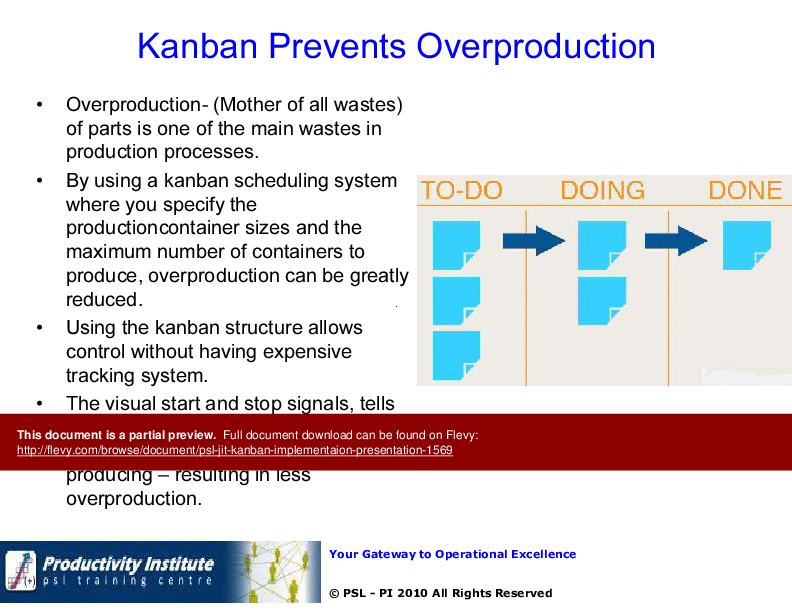
Kanban also prevents overproduction by using a scheduling system that specifies production container sizes and the maximum number of containers to produce. This structure allows control without the need for expensive tracking systems. Visual start and stop signals guide operators on when to start and stop producing, resulting in less overproduction. This presentation provides a comprehensive guide to implementing Kanban, including a step-by-step process, real-life examples, and case studies to illustrate its effectiveness.

Got a question about the product? Email us at support@flevy.com or ask the author directly by using the "Ask the Author a Question" form. If you cannot view the preview above this document description, go here to view the large preview instead.

MARCUS OVERVIEW

This synopsis was written by Marcus [?] based on the analysis of the full 62-slide presentation.


Executive Summary
The JIT – Kanban Implementation Presentation is a comprehensive guide designed to equip organizations with the knowledge and tools necessary to implement Kanban systems effectively. Developed by a Lean pioneer and certified LSS Master Black Belt, this presentation offers a step-by-step approach to Just-In-Time (JIT) manufacturing principles, emphasizing the importance of visual systems, flow regulation, and waste reduction. By leveraging real-life examples and case studies, this presentation enables executives and operational leaders to enhance productivity, reduce inventory, and streamline processes.

Who This Is For and When to Use
•  Operations Managers overseeing production processes
•  Supply Chain Leaders focused on inventory management
•  Lean Practitioners implementing continuous improvement initiatives
•  Project Managers coordinating cross-functional teams
•  Training and Development Teams facilitating employee education

Best-fit moments to use this deck:
•  During Lean transformation initiatives to introduce Kanban principles
•  In workshops aimed at enhancing operational efficiency and reducing waste
•  When training staff on visual management and JIT methodologies
•  For strategic planning sessions focused on inventory reduction and flow improvement

Learning Objectives
•  Define Kanban and its role in Just-In-Time manufacturing
•  Identify the benefits of implementing Kanban systems in various environments
•  Develop a step-by-step plan for implementing Kanban effectively
•  Analyze real-life examples to understand Kanban applications
•  Calculate Kanban sizes and container requirements based on production data
•  Establish visual management systems to enhance operational clarity

Table of Contents
•  History of Kanban (page 3)
•  Purpose of Kanban (page 5)
•  Kanban & Visual Systems (page 7)
•  Kanban and Planning & Scheduling (page 9)
•  What is a Kanban? (page 11)
•  Benefits of Kanban Systems (page 13)
•  Where is Kanban Used? (page 15)
•  Types of Kanban (page 17)
•  Step by Step Guide to Implementing Kanban (page 21)
•  Case Study – Kanban Calculations (page 25)

Primary Topics Covered
•  History of Kanban - Explores the origins of Kanban in Toyota's production system and its evolution into a key component of JIT manufacturing.
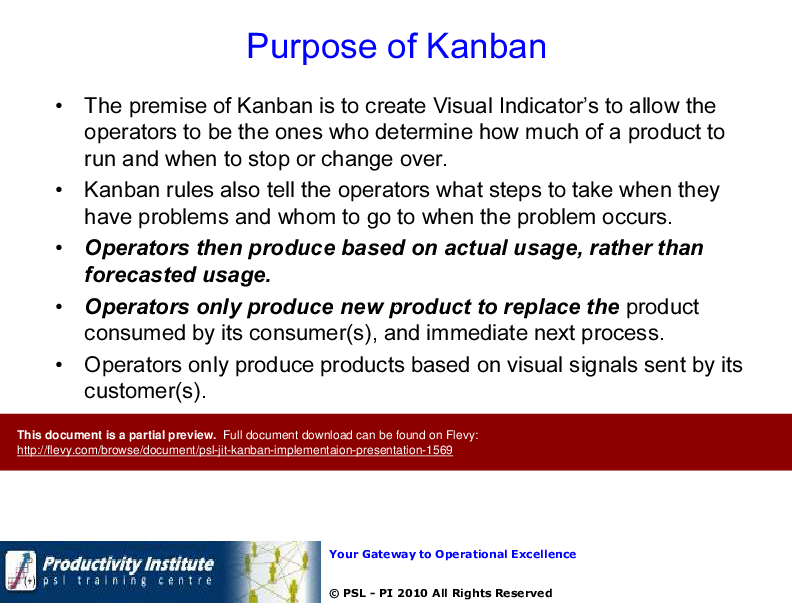
•  Purpose of Kanban - Discusses how Kanban empowers operators to control production based on actual usage rather than forecasts.
•  Kanban and Visual Systems - Highlights the role of visual indicators in improving operational transparency and decision-making.
•  Benefits of Kanban Systems - Details the advantages of Kanban, including inventory reduction, improved flow, and enhanced responsiveness to demand changes.
•  Types of Kanban - Describes various Kanban types, including Withdrawal, Production, and Signal Kanban, and their specific applications.
•  Step by Step Guide to Implementing Kanban - Provides a structured approach to implementing Kanban, including data collection, design, training, and auditing.

Deliverables, Templates, and Tools
•  Kanban card templates for production and withdrawal processes
•  Visual management plan examples for effective communication
•  Data collection worksheets for current state analysis
•  Calculation models for determining Kanban sizes and container requirements
•  Audit checklists to ensure Kanban system integrity
•  Continuous improvement frameworks for ongoing Kanban optimization

Slide Highlights
•  Overview of Kanban history and its significance in modern manufacturing
•  Visual representation of Kanban systems and their components
•  Case study illustrating Kanban calculations and practical applications
•  Examples of different types of Kanban and their operational roles
•  Step-by-step guide to implementing Kanban with actionable insights

Potential Workshop Agenda
Introduction to Kanban (60 minutes)
•  Overview of Kanban principles and history
•  Discussion on the purpose and benefits of Kanban

Hands-On Kanban Implementation (90 minutes)
•  Data collection exercises for current state analysis
•  Group activity to design Kanban systems tailored to specific processes

Kanban Calculations and Case Study (60 minutes)
•  Review of Kanban calculations using real-life examples
•  Group analysis of case study findings and lessons learned

Customization Guidance
•  Tailor Kanban card designs to reflect specific product lines and operational needs
•  Adjust visual management elements to align with organizational branding
•  Modify training materials to address unique team dynamics and roles
•  Incorporate specific metrics and KPIs relevant to the organization’s goals

Secondary Topics Covered
•  Visual management strategies for Kanban systems
•  Integration of Kanban with other Lean tools and methodologies
•  Techniques for measuring Kanban effectiveness and performance
•  Common challenges in Kanban implementation and solutions

Topic FAQ

What are the core steps to implement a Kanban system in a production environment?

Core steps begin with current-state data collection, followed by Kanban sizing calculations, system design, staff training, initiating the Kanban process, auditing performance, and continuous improvement. The author describes this as a structured 7-step implementation sequence, ending with ongoing audits and CI cycles over time.

How do you calculate Kanban sizes and container requirements for a line?

Kanban sizes are calculated from production demand, lead times, cycle time, and safety stock to ensure sufficient inventory without overproduction. Practical calculation models and a case-study walkthrough are provided to derive container requirements and card counts in real examples on the deck’s Kanban calculation slides.

What types of Kanban exist and when should each be used?

The main Kanban types are Withdrawal Kanban (authorizes material withdrawal), Production Kanban (signals production quantity), and Signal Kanban (alerts reorder points). Each serves different control points in a pull system and the presentation describes their operational roles and typical applications using these 3 types.

In what ways does Kanban reduce inventory and improve flow?

Kanban restricts work-in-process by specifying container sizes and maximum container counts, preventing overproduction and promoting one-piece or leveled flow. The author states Kanban can notably reduce inventory and improve responsiveness, including claims of inventory reduction by nearly 50% in applicable contexts.

What should I look for when choosing a Kanban training or implementation deck?

Look for clear step-by-step implementation guidance, practical calculation models, ready-to-use templates (Kanban cards), visual management examples, audit checklists, and real case studies to support workshops and training—elements included in Flevy's PSL JIT - Kanban Implementation Presentation such as Kanban card templates and calculation models.

How much time should I allocate for a Kanban workshop and what activities are typical?

A sample workshop agenda in the presentation suggests around 210 minutes total: 60-minute Kanban introduction, 90-minute hands-on implementation exercises (data collection/design), and 60-minute Kanban calculations and case study review, suitable for small cross-functional teams using the deck’s worksheets.

After a merger where inventory is excessive, how should I prioritize Kanban deployment across sites?

Prioritize areas with high WIP and variable demand by conducting current-state data collection, piloting visual management and Kanban calculations in a single line, and auditing results before scaling. The presentation provides data collection worksheets and a case study to pilot Kanban in a focused area.

Can Kanban be applied outside discrete manufacturing, such as in services or office workflows?

Yes; Kanban principles regulate flow and limit WIP in any setting needing pull-based control. The materials note Kanban’s applicability across manufacturing and service industries and illustrate tools like CONWIP, FIFO lanes, and Withdrawal/Production/Signal Kanban for different environments.

Document FAQ
These are questions addressed within this presentation.

What is Kanban?
Kanban is a visual management tool used to regulate workflow in manufacturing, facilitating a pull system where production is based on actual demand.

How does Kanban reduce inventory?
Kanban helps to minimize inventory levels by ensuring that only the necessary amount of product is produced to meet current demand, thus eliminating excess stock.

What are the types of Kanban?
The main types of Kanban include Withdrawal Kanban, Production Kanban, and Signal Kanban, each serving distinct roles in the production process.

How do I calculate Kanban sizes?
Kanban sizes are calculated based on production requirements, lead times, and safety stock levels, ensuring sufficient inventory to meet customer demand without overproduction.

What are the key steps in implementing Kanban?
The key steps include collecting data, calculating Kanban sizes, designing the system, training staff, starting the Kanban process, auditing its effectiveness, and continuously improving the system.

Where can Kanban be applied?
Kanban can be applied in various settings, including manufacturing, service industries, and any area requiring flow regulation and inventory management.

What are the benefits of using Kanban?
Benefits include reduced inventory levels, improved workflow efficiency, enhanced responsiveness to customer demand, and minimized waste in production processes.

How can I ensure the success of my Kanban implementation?
Success can be ensured by regularly auditing the Kanban system, training staff effectively, and continuously seeking opportunities for process improvement.

Glossary
•  Kanban - A visual signal used to trigger production or movement of materials in a pull system.
•  Just-In-Time (JIT) - A manufacturing philosophy that aims to reduce waste by receiving goods only as they are needed.
•  Withdrawal Kanban - A card that authorizes the withdrawal of materials from inventory.
•  Production Kanban - A card that signals the need to produce a specific quantity of items.
•  Signal Kanban - A visual alert indicating that a reorder point has been reached.
•  Cycle Time - The total time from the beginning to the end of a process, including processing and waiting times.
•  Takt Time - The maximum allowable time to produce a product to meet customer demand.
•  Visual Management - The use of visual signals to communicate information about processes and performance.
•  Continuous Improvement - Ongoing efforts to improve products, services, or processes.
•  Safety Stock - Extra inventory held to prevent stockouts due to variability in demand or supply.
•  Lead Time - The total time it takes from the initiation of a process to its completion.
•  Work in Process (WIP) - The total amount of partially finished goods in the production process.
•  Flow Regulation - Managing the movement of materials and products through a production system.
•  Overproduction - Producing more than what is needed, leading to waste and excess inventory.
•  Production Scheduling - Planning the timing and sequence of production activities.
•  Heijunka - A technique for leveling production by distributing work evenly over time.
•  CONWIP - Constant Work In Progress, a system that controls the amount of work in process without using Kanban cards.
•  FIFO - First In, First Out, a method for managing inventory where the oldest stock is used first.
•  Visual Indicators - Signs or signals used to convey information about the status of a process.
•  Operational Excellence - The execution of the business strategy more consistently and reliably than the competition.
•  Lean Manufacturing - A production practice that considers the expenditure of resources in any aspect other than the direct creation of value for the end customer to be wasteful and thus a target for elimination.

Source: Best Practices in JIT, Kanban PowerPoint Slides: PSL JIT - Kanban Implementation Presentation PowerPoint (PPT) Presentation Slide Deck, OpEx Academy NZ


$39.00
This presentation is developed by a pioneer in Lean and certified LSS Master Black Belt who has trained over 5,000+ students globally, from Directors, CEOs, GMs, to shop floor staff. He's endorsed by CMI Consortium, NZTE, HERA, NZPICS, CBAFF.
Add to Cart
  

ABOUT THE AUTHOR

Author image
Additional documents from author: 88

Vishnu Rayapeddi is an experienced management consultant and trainer specializing in implementing continuous process improvements. Vishnu is a pioneer in Lean Management which combines the power of Lean Thinking, TOC, Six Sigma, TQM, TWI, Balanced Scorecard, cGMP and other best-class methodologies such as, DMAIC, Value Stream Mapping, Root Cause Analysis, 5S, Quick Changeovers, Quality and ... [read more]

Ask the Author a Question

You must be logged in to contact the author.

Click here to log in Click here register

Did you know?
The average daily rate of a McKinsey consultant is $6,625 (not including expenses). The average price of a Flevy document is $65.

Bundle and save! You can save up to % with bundles!

View bundle(s)


Trusted by over 10,000+ Client Organizations
Since 2012, we have provided business templates to over 10,000 businesses and organizations of all sizes, from startups and small businesses to the Fortune 100, in over 130 countries.
AT&T GE Cisco Intel IBM Coke Dell Toyota HP Nike Samsung Microsoft Astrazeneca JP Morgan KPMG Walgreens Walmart 3M Kaiser Oracle SAP Google E&Y Volvo Bosch Merck Fedex Shell Amgen Eli Lilly Roche AIG Abbott Amazon PwC T-Mobile Broadcom Bayer Pearson Titleist ConEd Pfizer NTT Data Schwab


Read Customer Testimonials

 
"FlevyPro has been a brilliant resource for me, as an independent growth consultant, to access a vast knowledge bank of presentations to support my work with clients. In terms of RoI, the value I received from the very first presentation I downloaded paid for my subscription many times over! The "

– Roderick Cameron, Founding Partner at SGFE Ltd
 
"I like your product. I'm frequently designing PowerPoint presentations for my company and your product has given me so many great ideas on the use of charts, layouts, tools, and frameworks. I really think the templates are a valuable asset to the job."

– Roberto Fuentes Martinez, Senior Executive Director at Technology Transformation Advisory
 
"As a consultant requiring up to date and professional material that will be of value and use to my clients, I find Flevy a very reliable resource.

The variety and quality of material available through Flevy offers a very useful and commanding source for information. Using Flevy saves me time, enhances my expertise and ends up being a good decision."

– Dennis Gershowitz, Principal at DG Associates
 
"I am extremely grateful for the proactiveness and eagerness to help and I would gladly recommend the Flevy team if you are looking for data and toolkits to help you work through business solutions."

– Trevor Booth, Partner, Fast Forward Consulting
 
"My FlevyPro subscription provides me with the most popular frameworks and decks in demand in today’s market. They not only augment my existing consulting and coaching offerings and delivery, but also keep me abreast of the latest trends, inspire new products and service offerings for my practice, and educate me "

– Bill Branson, Founder at Strategic Business Architects
 
"Flevy.com has proven to be an invaluable resource library to our Independent Management Consultancy, supporting and enabling us to better serve our enterprise clients.

The value derived from our [FlevyPro] subscription in terms of the business it has helped to gain far exceeds the investment made, making a subscription a no-brainer for any growing consultancy – or in-house strategy team."

– Dean Carlton, Chief Transformation Officer, Global Village Transformations Pty Ltd.
 
"If you are looking for great resources to save time with your business presentations, Flevy is truly a value-added resource. Flevy has done all the work for you and we will continue to utilize Flevy as a source to extract up-to-date information and data for our virtual and onsite presentations!"

– Debbi Saffo, President at The NiKhar Group
 
"I have found Flevy to be an amazing resource and library of useful presentations for lean sigma, change management and so many other topics. This has reduced the time I need to spend on preparing for my performance consultation. The library is easily accessible and updates are regularly provided. A wealth of great information."

– Cynthia Howard RN, PhD, Executive Coach at Ei Leadership


Save with Bundles

This document is available as part of the following discounted bundle(s):

Save %!
PSL - Lean Supply Chain Bundle

This bundle contains 6 total documents. See all the documents to the right.

$225.00


Add Bundle & Save


Customers Also Bought These Documents


Customers Also Like These Documents

Explore Related Management Topics


Your Recently Viewed Documents
Receive our FREE presentation on Operational Excellence

This 50-slide presentation provides a high-level introduction to the 4 Building Blocks of Operational Excellence. Achieving OpEx requires the implementation of a Business Execution System that integrates these 4 building blocks.